Football Story Training and Skills Guide
Personal sessions power Rad; team sessions power the kids who share his pitch.
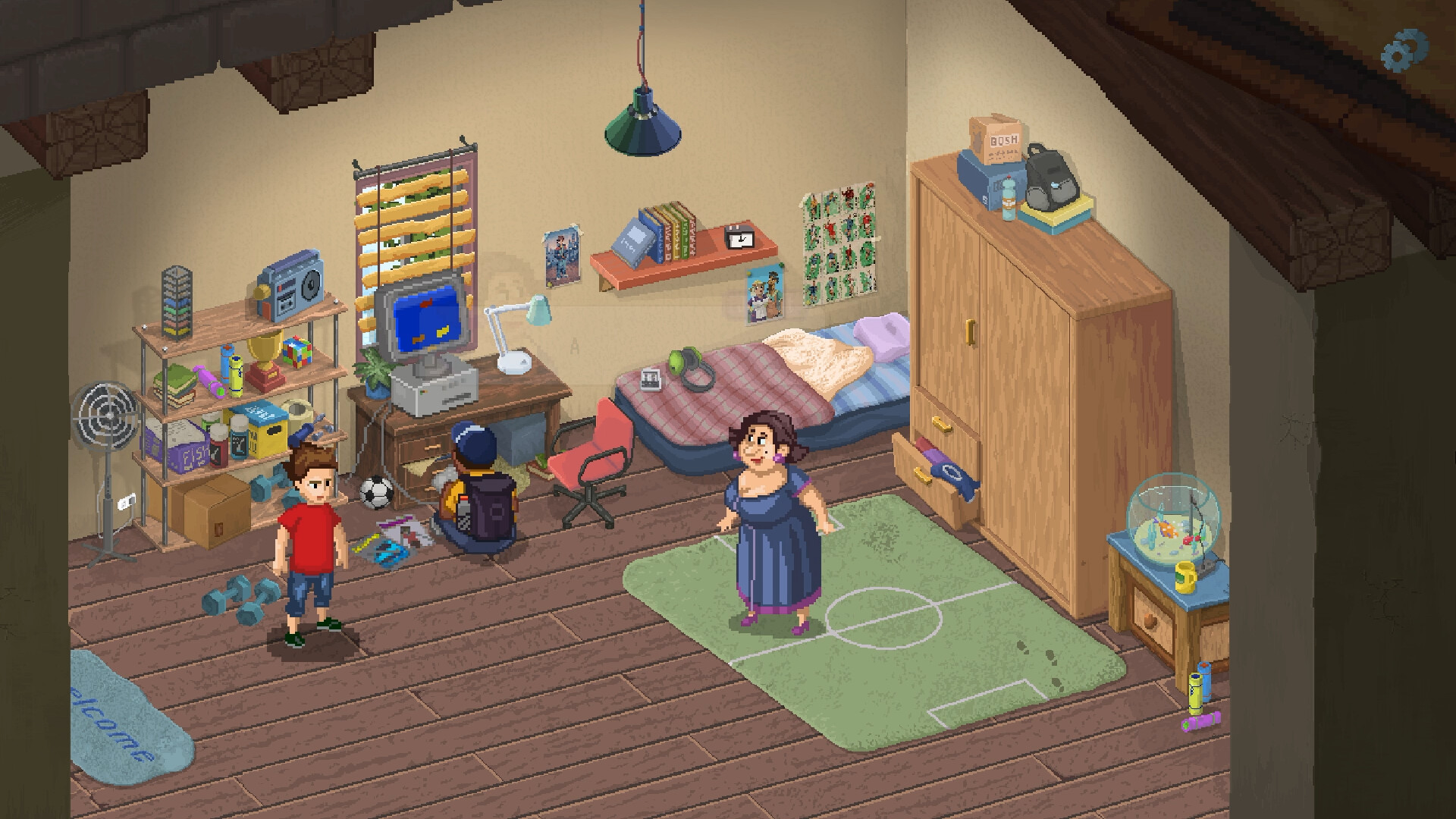
Training is the spine of Football Story’s RPG layer. Matches decide pride, but the gym, drills, and shared sessions decide whether Rad and his neighborhood kids can actually execute a plan. Developer notes are clear on the split that confuses new players: personal training upgrades Rad, while team training upgrades teammates. Ignore either half and the pitch feels broken—either you are too slow to finish, or your AI friends refuse to combine. This guide explains both tracks, how skills and synergies fit, and how training feeds the tactics in How to Win Matches.
Why training exists in a cozy football RPG
Football Story is not a pure arcade kickabout and not a spreadsheet manager. You live in Lumen Bay, take odd jobs, help locals, recruit kids, and still need measurable growth. Exercises and mini-games keep stats sharp. Skip them and characters feel sluggish; keep a steady rhythm and new tricks—charged shots, lofted passes, chips, advanced dribbling—open on top of base attributes. The fantasy is a teenage dream earned through routine, not a single miracle match against Stormy Cormorant.
Personal training: building Rad
Personal sessions focus on the protagonist you control in every match. Expect work that targets:
- Pace and stamina so sprint bursts in Controls remain useful late in games.
- Shooting and finishing including the hold-to-charge basic strike.
- Ball control and dribbling for tight street pitches.
- Unlockable tricks such as lofted (high) passes, chip shots over keepers or defenders, and advanced dribble tools.
Prioritize personal training when:
- You lose because Rad cannot beat the first marker.
- Charged shots feel weak even with space.
- New skill prompts appear after story or demo milestones.
- Stamina collapses whenever you press sprint twice.
Do not dump every free block into Rad alone. A maxed captain with untrained teammates still watches the ball die in midfield.
Team training: building everyone else
Team sessions upgrade the kids you recruit across neighborhoods like Sunny Pan. Because you never possess those players, their AI quality is your quality. Team training improves how reliably they:
- Offer passing lanes.
- Respond to Pass! and Shoot! yells.
- Hold shape based on defender / midfielder / forward roles.
- Maintain chemistry instead of playing as isolated hobbyists.
Schedule team work when:
- Teammates ignore open Rad runs.
- Defenders ball-watch while rivals walk in.
- You just recruited a promising kid who still feels like a passenger.
- Pre-match roles look correct on paper but collapse after five minutes.
Chemistry is the soft glue between roster and tactics. Helping locals and sharing neighborhood life supports that glue; team drills harden it into on-pitch habits.
Skills, synergies, and tactical combos
Demo updates called out deeper player synergies, clearer role distribution, and tactical combos that are easier to understand than earlier tests. In practice that means:
- Roles matter. Pre-match positioning of defenders, midfielders, and forwards changes AI behavior—training makes those roles competent enough to obey the idea.
- Synergies reward coherent squads. Kids who train and hang out together combine more cleanly than a pile of high-stat strangers.
- Unconventional tactics exist. New skills invite surprise setups; experiment in Sunny Pan before copying a single “meta” eleven.
- Tutorial clarity improved. When a skill unlocks, let the game teach the input, then confirm the binding in Options.
Think of skills as verbs you add to Rad’s vocabulary and synergies as adverbs that describe how the squad uses those verbs together.
A balanced weekly rhythm (demo or full game)
Exact calendars vary by build, but a healthy loop looks like:
- Morning or first free block: personal drill targeting your biggest Rad weakness.
- Shared block: team session after any new recruit or ugly loss.
- Life-sim block: odd jobs and favors that fund rewards and relationships.
- Match block: apply the gains with deliberate roles and yells.
- Review: if the loss was “Rad too slow,” personal; if “nobody passed,” team; if “wrong shape,” roles—not more mindless grinding.
Players who only train the day before a rivalry match often spike one stat and forget chemistry. Players who only do chores never unlock the chip that beats a parked keeper. Alternate on purpose.
Connecting training to match inputs
- Stamina training → longer useful sprint windows (Shift / pad sprint).
- Shot training → stronger hold-to-charge finishes.
- Trick unlocks → lofted passes and chips on LMB/RMB or bumper/face-button schemes.
- Team upgrades → yells actually produce passes and shots instead of blank stares.
- Synergy work → pre-match formations behave like the diagram you set.
If a new move never appears in matches, you may have unlocked it in the menu but not internalized the control—revisit Controls.
Progression milestones toward Stormy Cormorant
Early game (Sunny Pan and first rivals): establish the personal vs team habit, unlock basic charged shooting comfort, and recruit a stable starting group.
Mid Aggromeration: chase synergies, specialize roles, and add lofted/chip tools for smarter chance creation.
Amateur Showdown path: polish stamina management, ensure every starter responds to yells under pressure, and stop experimenting with wild roles on match day—experiment in friendlies and training instead.
Stormy Cormorant is a pro benchmark. Neighborhood kids will not out-talent them on raw aura alone; they out-prepare them with weeks of honest sessions and chemistry.
Common training mistakes
- Only training Rad. Creates a highlight-reel dribbler on a silent team.
- Only training the team. Creates tidy AI patterns with a protagonist who cannot finish.
- Ignoring mini-games. They exist to keep stats sharp—treat them as part of the RPG, not optional fluff.
- Skipping life-sim bonds. Chemistry is not only a gym number.
- Unlocking tricks and never practicing them. A chip you cannot aim under pressure is still locked in spirit.
- Grinding past fatigue without a match. Stats need game film; schedule a kickabout to validate the plan.
How the demo teaches the system
The free Sunny Pan demo (Steam app 884380) is intentionally built around core gameplay, the reworked personal/shared skill systems, and match improvements. Use it as a lab: break a session on purpose (all personal, then all team) and feel the difference, then return to balance. The Sunny Pan Demo Guide ties jobs and recruits into that lab. Getting Started covers install and first-hour order.
Related pages
- Getting Started — when to train in the early loop.
- Controls — where unlocked skills live on keyboard and pad.
- How to Win Matches — converting training into results.
- Sunny Pan Demo Guide — practice neighborhood.
- Guides Hub — full index.
Train with intent: Rad’s personal ceiling, the squad’s shared floor, and the synergies between them. That triangle—not a single lucky volley—is what carries a street team from Sunny Pan chatter to a night under Amateur Showdown lights.
Frequently Asked Questions
Quick answers for Football Story players.
What is the difference between personal and team training?
Personal training upgrades Rad, the only character you control in matches. Team training upgrades teammates so their AI, chemistry, and responses to yells improve.
Why should I bother with team sessions?
You cannot switch players. Untrained teammates ignore lanes and waste possession even if Rad’s stats look great.
What skills can training unlock?
Beyond base stats, expect charged shooting comfort plus unlockable tools such as lofted passes, chip shots, advanced dribbling, and further tricks revealed in-game.
Do synergies matter?
Yes. Demo updates deepened synergies, role distribution, and tactical combos. Coherent squads outperform random high-stat lineups.
How often should I train before matches?
Keep a rhythm: personal work for Rad’s gaps, team work after recruits or selfish AI games, then validate with a match instead of endless drills.