Football Story Teammates & Lumen Bay Crew
Recruit kids, raise chemistry, and train the AI side of your street team.
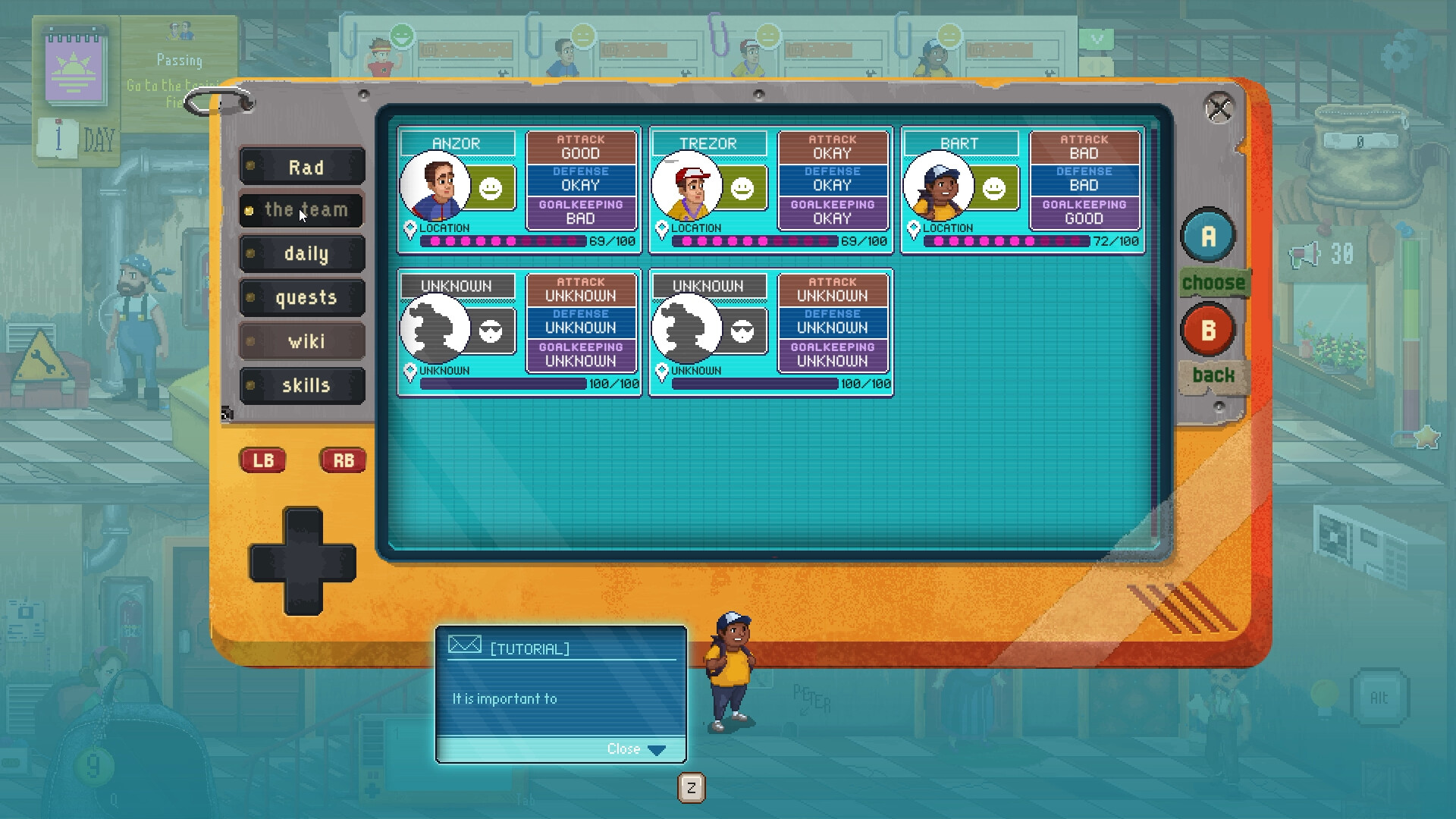
In Football Story, teammates are half the fantasy. You control Rad only, so the kids you recruit — and how well they understand each other — decide whether Pass! and Shoot! feel magical or messy. This page covers recruiting, chemistry, team training, and the Lumen Bay NPC life that feeds the roster. Pair it with Rad for the protagonist loop and Skills for what to prioritize when practice time is limited.
Why teammates matter in a single-player football RPG
Football Story is a single-player cozy RPG + life sim. There is no live co-op partner to cover your blind side. The AI crew is your supporting cast. When chemistry is low and team training is neglected, matches become Rad-versus-the-world. When the crew is tuned, your shouts land into movement that already makes sense.
Think of teammates as a progression channel equal to Rad’s personal growth — not cosmetic mascots.
Recruiting neighborhood kids
Store and trailer messaging is consistent: you recruit kids from the neighborhood to build a street team. Recruitment is woven through exploration rather than a dry transfer list. Practical habits that match the published fantasy:
- Walk the town. Lumen Bay (the Aggromeration vibe) is meant to be explored between matches.
- Help locals. Odd jobs and resident requests are doors into social circles where players hang out.
- Follow story prompts. When the narrative introduces a potential teammate, treat it as roster content, not optional flavor.
- Come back later. Life-sim games often soft-gate introductions; revisiting areas after key beats can surface new faces.
We avoid inventing named unlock trees that Steam has not spelled out. If the demo shows a specific recruit path, use that as your working model and expect launch to deepen it.
Chemistry: the soft stat that changes shout quality
Chemistry is the relationship layer. Public materials highlight building chemistry as you form the team. In play terms, chemistry is why time spent off the pitch matters:
- Shared training and story time make AI runs more trustworthy.
- Ignoring the crew while only grinding Rad can leave combinations brittle.
- Helping the same social cluster (jobs, hangouts, match prep) reinforces the “neighborhood team” fantasy the game sells.
Chemistry is not a substitute for mechanical skill — Rad still has to take good touches — but it is the multiplier on teammate usefulness.
Team training vs personal training
Remember the split:
- Personal training → Rad
- Team training → teammates
A simple session template that works well in demo-length play:
- One personal block so Rad’s feel stays sharp.
- One team block so AI partners keep pace.
- A short explore / odd-job loop for recruiting and chemistry.
- A match to test whether shouts and spacing improved.
If your notes after a match say “I was fine but nobody showed for the layoff,” schedule team training before more personal drills. If your notes say “teammates were fine but I lost every duel,” flip it. The Skills page expands this into a priority framing for pre-release play.
NPCs and odd jobs in Lumen Bay
Teammates do not exist in a vacuum. Residents hand out odd jobs, comic situations, and reasons to cross the map. Those errands are the life-sim spine: they reward attention, open conversations, and keep the town feeling inhabited when you are not in a match.
How to treat NPCs as a roster system:
- Listen for football hooks. A neighbor talking about a kid who can play is a recruitment breadcrumb.
- Do the small jobs. Even mundane tasks can unlock trust that later becomes a teammate introduction.
- Watch for group spaces. Parks, couches, hangouts — the game’s own marketing jokes that the couch is also a sport. Social spaces are where chemistry grows.
- Separate story NPCs from pitch AI. Some characters matter for quests more than for formations; not every friend needs to start every match.
Devlogs have leaned into “quirky neighbors” and a motley crew beside Rad. Expect personality-first writing: oddballs first, spreadsheet second. Official autumn 2026 posts named example teammates such as Anzor and Tresor, and sketched neighborhood NPCs (for example Grandma Lao’s rooster gossip, and pairs like Joseph and Martha). Treat those names as confirmed flavor from Devlog #3/#5 rather than a complete roster dump—the demo and full game can introduce more kids as you explore.
How teammates behave in matches
During kickoff you still only steer Rad. Teammates:
- Position according to AI and the tactical context.
- Respond to your Pass! and Shoot! shouts.
- Benefit from prior team training and chemistry.
Your pre-match role (defender / midfielder / forward) changes your job more than it renames every teammate. Still, role choice changes spacing — a forward Rad asks different support runs than a defender Rad. Work through those patterns on Tactics.
Building toward Stormy Cormorant with a real crew
The dream match against Stormy Cormorant is a team story, not a solo highlight reel. Neighborhood amateurs are the proving ground where you learn whether your recruits can hold shape. Use early matches as diagnostics:
| Symptom after a match | Likely fix |
|---|---|
| Rad wins duels but chances die | More team training; review Pass! timing |
| Easy giveaways in your half | Try defender role; tighten chemistry habits |
| Isolation on the wing | Recruit / train another presence; explore midfield role |
| Good build-up, poor finishes | Practice Shoot! windows; personal finishing feel |
Pre-release caveats
Until the December 4, 2026 launch, treat named affinity charts and exact chemistry formulas as unknown unless a patch note states them. This guide sticks to systems Steam and official posts emphasize: recruit kids, help locals, build chemistry, train the team, control only Rad, shout commands in matches.
Older marketing that framed multiple campaign protagonists or multiplayer pick-up matches is historical context. Current packaging is Rad-centered single-player; teammate play is AI + life-sim recruitment, not online co-op.
Demo checklist for teammates
- Note every kid introduced in the demo story — write a one-line scouting note.
- After each odd job, ask: did this unlock a person or only a reward?
- Alternate personal and team training at least once per session.
- In one match, shout less and watch AI spacing; in the next, shout with purpose.
- Wishlist the full game via the Release Date page so launch roster depth does not surprise you cold.
Related links
- Rad — protagonist and personal training
- Players Hub — section index
- Skills — training priorities
- Tactics — roles and shouts
- Formations — Parked Bus, midfield shapes, 1+1+1
- Jobs & Side Quests — odd jobs that unlock social doors
- Stormy Cormorant — the Amateur Showdown endgoal
- Getting Started — first-hour flow
- Demo & Next Fest — what the demo emphasized in patches
- Wiki overview — full site map
Frequently Asked Questions
Quick answers for Football Story players.
How do I recruit teammates in Football Story?
Explore Lumen Bay, help locals with odd jobs, and follow story introductions to neighborhood kids. Recruitment is woven into the life-sim layer rather than a pure transfer menu.
What does chemistry do?
Chemistry is the relationship glue for your street team. Building it through time together, training, and town life makes AI teammates more useful when you shout Pass! or Shoot!
Should I skip team training if I only care about Rad?
No. You control Rad only, so weak teammates punish you even if Rad is sharp. Balance personal and team training.
Are teammates other online players?
No under current Steam packaging. Football Story is single-player; teammates are AI characters you recruit and train.
Do odd jobs really matter for the squad?
Yes. Odd jobs and helping residents are primary ways the game opens social doors, rewards, and recruiting opportunities in Lumen Bay.